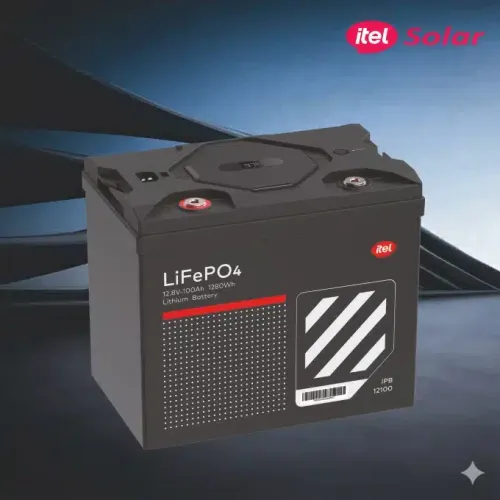
itel 1280Wh 12V Lithium Battery (LiFePO₄) – Smart Solar Storage Solution IPB-12100 IP21
Entry-level 12V LiFePO₄ for starter solar systems.
Price
₦231,000
The battery decides how long your power lasts, and it is usually the most expensive part of the system. It is also where the biggest long-term saving hides: a LiFePO₄ battery rated for 6,000+ cycles will outlast several sets of tubular batteries, needs no water top-ups and no equalisation charges, and can be discharged far deeper without damage.
The itel range covers 1.28kWh single units through to 32kWh, in 12.8V, 25.6V and 51.2V configurations, wall-mounted or floor-standing. Which one you need follows directly from your inverter's voltage and the hours of backup you want.
Entry-level 12V LiFePO₄ for starter solar systems.
Price
₦231,000
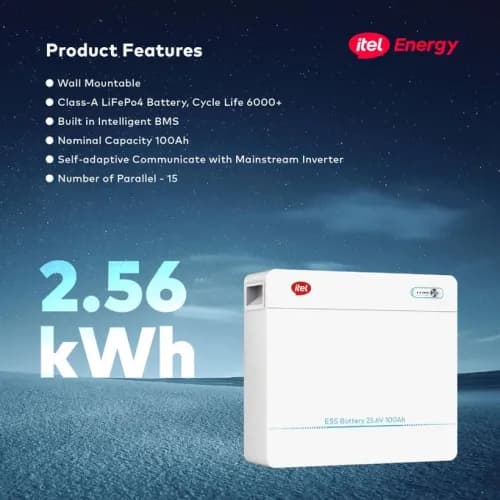
Compact wall-mounted 2.56kWh LiFePO₄ storage.
Price
₦601,700
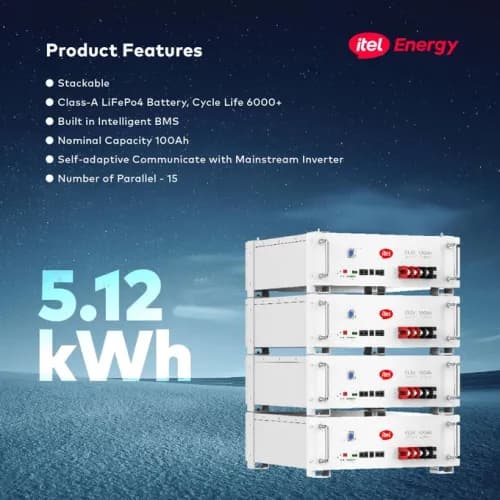
Modular 5.12kWh for expandable 48V home storage.
Price
₦995,500
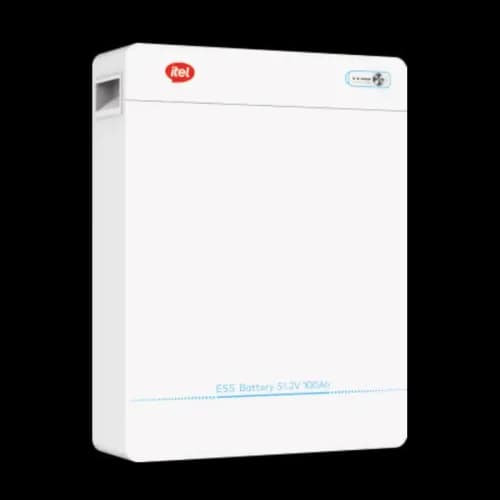
Wall-mounted 5.12kWh for 24V inverter systems.
Price
₦1,037,300
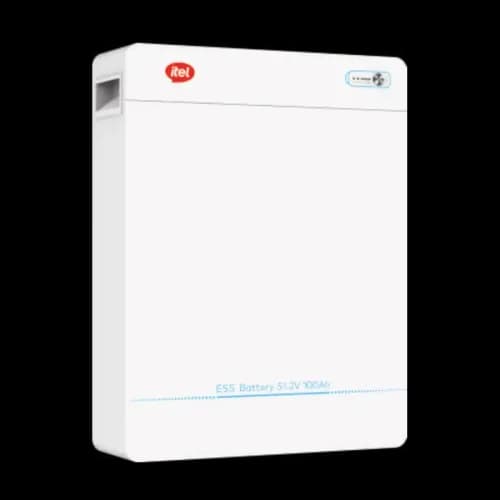
Wall-mounted 5.12kWh for 48V inverter systems.
Price
₦1,001,000
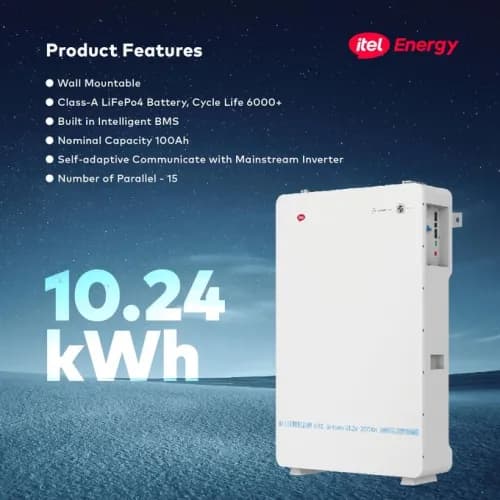
Extended backup — 10.24kWh for homes, clinics and offices.
Price
₦1,903,000
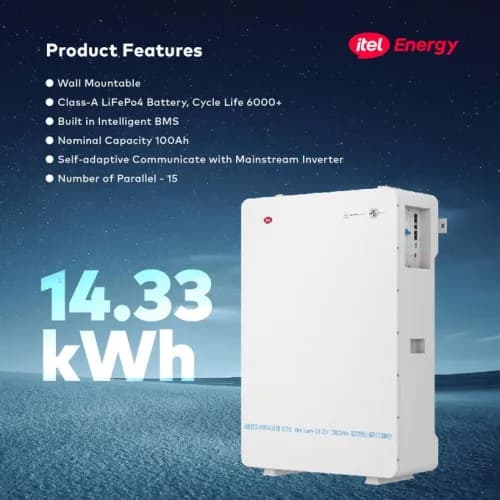
High-capacity 14.33kWh for big homes and offices.
Price
Request current price
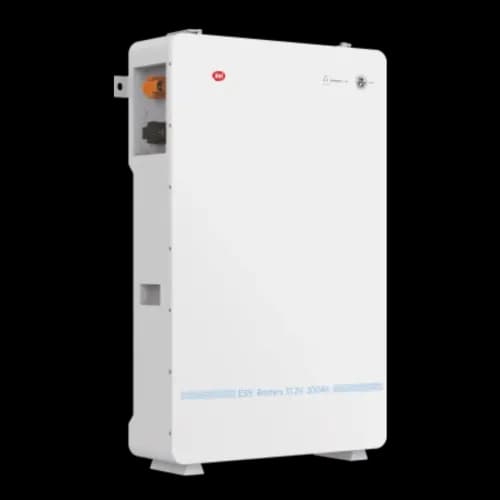
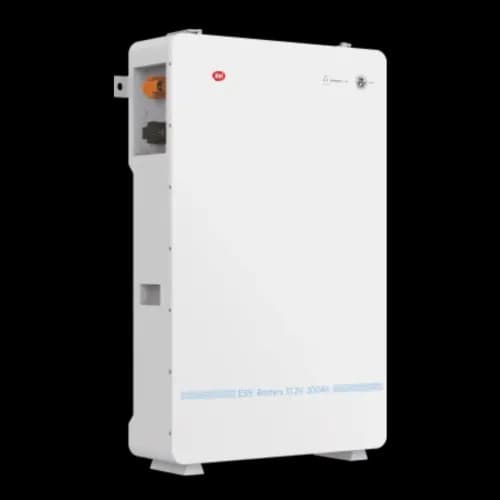
16kWh LiFePO₄ for maximum home and business backup.
Price
Request current price
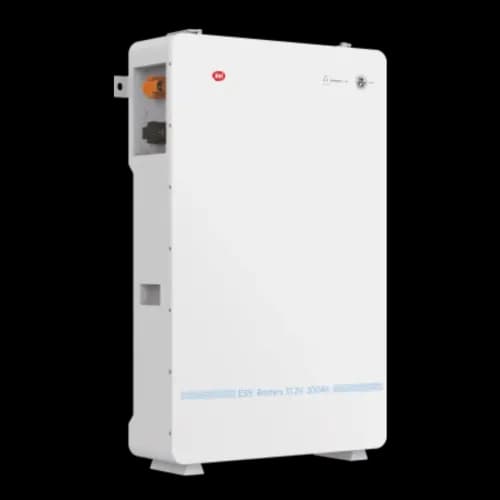
16kWh outdoor-rated LiFePO₄ — weatherproof and durable.
Price
Request current price
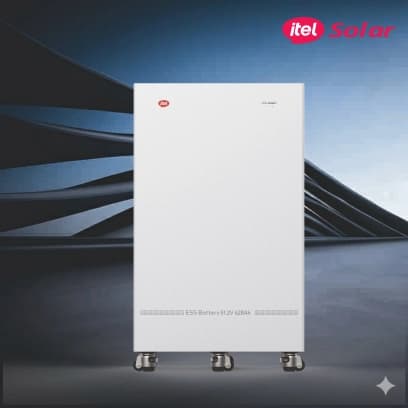
Ultra-high-capacity 32kWh for estates and large commercial use.
Price
₦4,653,000
This is not negotiable. A 48V inverter needs 51.2V batteries; a 24V inverter needs 25.6V. Getting this wrong means the equipment simply will not work together, so confirm your inverter model before ordering.
Multiply your average load in watts by the hours of backup you want, then divide by 1,000. A 600W average load for 10 hours is 6kWh — so a 5.12kWh battery is slightly short and 10.24kWh gives comfortable margin. Our runtime calculator does this from your appliance list.
Wall units suit smaller capacities and tight spaces. Floor-standing and stackable units suit larger banks and make future expansion straightforward — you add another module rather than replacing what you have.
Compare cost per usable kWh over the battery's life, not sticker price. Lead-acid is typically replaced every one to two years and should only be discharged about halfway; LiFePO₄ lasts years longer and gives you far more of its rated capacity. Over a decade the lithium option is usually the cheaper one.
Battery Runtime Calculator
Estimate how many hours a given battery size will carry your appliances.
Collect from our store at KM 32 Badagry Expressway, Agbara Bus Stop, Lagos State, or we arrange delivery — locally along the Badagry Expressway corridor and Ogun West, and nationwide by courier. Delivery cost depends on weight and destination and is always confirmed before you pay.
Installers, dealers and contractors buying in quantity should see our trade and installer page for bulk terms.
The itel range is rated at 6,000+ charge cycles. Cycled once a day that is well over a decade of service, though real-world life depends on how deeply you discharge it, ambient temperature and correct charge settings.
Match the voltage: 51.2V batteries for 48V inverters, 25.6V for 24V inverters, 12.8V for 12V. Send us your inverter model on WhatsApp and we will confirm the right pairing before you buy.
For most users, yes — longer life, deeper usable capacity, faster charging and no maintenance. The trade-off is a higher purchase price, which is why we suggest comparing cost per usable kWh over the expected life rather than the price on the day.
With the stackable floor-standing models, yes — that is what they are designed for. Tell us at the outset that you plan to expand and we will steer you to a model and inverter that make it straightforward.
Send us the appliances you want to run. We size the system for you free of charge and tell you honestly what it will and will not carry.
💬 Ask which system suits my appliances